
Why Sarees Are Cheap in Surat?
Surat is one of the most important textile cities in India. It is especially famous for sarees, dress materials, fabrics, embroidery, and synthetic textiles. People from different parts of India visit Surat to buy sarees at affordable prices. Many online sellers and retailers also purchase sarees from Surat and sell them in other cities.
Every saree has its own story. the use ai tools like chatgpt improve your work .
The main reason is Surat’s large textile manufacturing industry. Many sarees are produced, processed, embroidered, packed, and supplied through businesses located in and around the city. Because many stages of production happen close to each other, businesses can reduce several costs.
However, cheap does not always mean low quality. Surat has sarees in many price ranges. Buyers can find simple daily-wear sarees as well as heavily embroidered sarees for weddings and special occasions.
In this article, we will understand the main reasons why sarees are available at affordable prices in Surat.
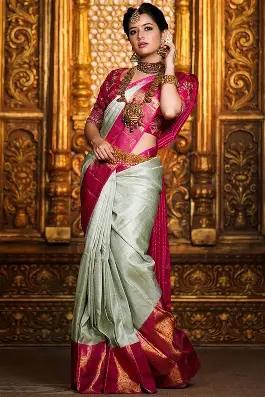
1. Surat Has a Large Textile Industry
One of the biggest reasons sarees are affordable in Surat is its large textile industry.
Surat has developed into a major textile and synthetic-fabric manufacturing centre. A large number of businesses are involved in weaving, dyeing, printing, embroidery, finishing, wholesale trading, and distribution.
When an industry becomes large, businesses can produce goods on a bigger scale. This can reduce the cost of producing each individual saree.
For example, instead of producing only 100 sarees, a manufacturer may produce thousands of pieces of a particular design. The cost of machinery, labour, packaging, and other operations can then be spread across many sarees.
This helps manufacturers offer competitive prices.
2. Large-Scale Production
Large-scale production is another important reason for affordable sarees in Surat.
Manufacturers often produce sarees in large quantities. They may create hundreds or thousands of sarees using the same fabric, design, or production process.
Bulk production can reduce the cost per saree.
For example, if a manufacturer orders a large quantity of fabric, the cost per metre may be lower than buying a small quantity. Similarly, using the same design repeatedly can make production faster.
The manufacturer can then pass some of these savings to wholesalers and retailers.
This is particularly useful for buyers who want to purchase sarees in bulk.
3. Strong Textile Supply Chain
Surat has a well-developed textile supply chain.
A saree may go through several stages before reaching the final customer. These stages can include:
- Yarn production
- Weaving
- Dyeing
- Printing
- Embroidery
- Finishing
- Packaging
- Wholesale distribution
In a major textile centre like Surat, many businesses involved in these activities operate within the same broader industrial ecosystem.
This makes it easier for manufacturers and traders to source materials and services.
A strong supply chain can reduce delays and transportation costs between different stages of production.
As a result, the final price of some sarees can remain competitive.
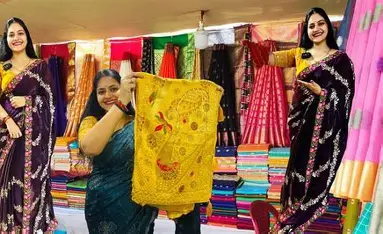
4. Availability of Synthetic Fabrics
Surat is particularly well known for synthetic textiles.
Materials such as polyester, georgette, chiffon, and other man-made fabrics are widely used in many sarees produced and traded in the city.
Synthetic fabrics can sometimes cost less than certain natural fibres, depending on the material, manufacturing process, and quality.
This allows manufacturers to produce sarees at different price points.
For example, a simple polyester saree may be much more affordable than a premium handwoven silk saree. Both can look attractive, but their materials and production methods are different.
Therefore, when people say that sarees are cheap in Surat, they are often referring to the wide availability of affordable synthetic and blended-fabric sarees.
5. Direct Manufacturer and Wholesale Buying
Another reason sarees can be cheaper in Surat is the availability of wholesale markets and direct business-to-business sales.
Retailers and resellers may purchase sarees directly from manufacturers or wholesalers instead of buying through multiple intermediaries.
Every additional intermediary may add a margin to the product price.
For example, consider a simple supply chain:
Manufacturer → Wholesaler → Retailer → Customer
If a buyer purchases closer to the manufacturer, fewer margins may be added before the saree reaches the buyer.
This does not mean every saree bought directly from Surat will automatically be cheaper. Prices depend on quality, quantity, design, brand, and negotiation.
However, wholesale buying can make a significant difference, especially for businesses purchasing large quantities.
6. Competition Between Sellers
Surat has many textile businesses and saree sellers.
When many sellers offer similar products, competition can become strong. Businesses may compete through:
- Price
- Designs
- Quality
- Variety
- Customer service
- Bulk discounts
- New collections
Strong competition can encourage sellers to keep prices competitive.
A retailer who wants to attract customers may choose affordable pricing or offer better value through discounts and bulk deals.
This gives buyers more options.
7. Low-Cost Production Options
Not every saree requires expensive materials or complicated craftsmanship.
Surat manufacturers produce a wide range of sarees. Some are designed for everyday use and mass-market customers.
These sarees may use:
- Affordable fabrics
- Machine embroidery
- Printed designs
- Simple borders
- Lightweight materials
- Standardised production methods
Such production methods can keep manufacturing costs lower.
At the same time, Surat also has expensive sarees with detailed embroidery, premium fabrics, and elaborate designs.
Therefore, the city should not be considered a place where every saree is cheap. Instead, it is a place where buyers can find a very wide range of prices.
8. Machine-Based Production
Technology also plays an important role in textile production.
Machines can help manufacturers produce fabric and saree designs quickly and consistently. Machine embroidery and digital or automated printing can reduce the amount of manual work required for some products.
When a product is made in large quantities using efficient machinery, production can become faster.
This can help lower the manufacturing cost per saree.
However, machine-made sarees and handmade sarees should not be compared only on price. Handmade products may require more time and skilled craftsmanship, which can increase their price.
9. Huge Variety of Sarees
One major advantage of buying sarees from Surat is the variety available.
Buyers can find sarees for different occasions, budgets, and age groups.
Some popular categories include:
- Georgette sarees
- Chiffon sarees
- Organza sarees
- Crepe sarees
- Net sarees
- Printed sarees
- Party wear sarees
- Embroidered sarees
- Designer-style sarees
- Daily-wear sarees
- Wedding sarees
Because manufacturers produce products for different customer segments, buyers can choose according to their budget.
A customer looking for a simple saree can find an affordable option, while someone looking for a heavily decorated saree can choose a more expensive product.
10. Bulk Orders Reduce Costs
Bulk purchasing is especially important in Surat’s textile market.
Retailers, online sellers, boutiques, and resellers may order dozens or hundreds of sarees at one time.
When a seller buys in bulk, the supplier may offer a lower price per piece.
For example, buying one saree may have a different price from buying 50 or 100 sarees.
Bulk orders can help businesses reduce their average purchase cost.
This is one reason why Surat is popular among saree wholesalers and retailers.
11. Efficient Distribution Network
Surat has strong connections with markets across India.
Sarees manufactured or traded in Surat are supplied to many other cities and states.
A strong distribution network allows businesses to move large quantities of textiles efficiently.
Wholesalers can purchase products and send them to retailers in different parts of India.
This large market supports high sales volumes. High sales volume can help businesses maintain competitive prices.
12. Lower Price Does Not Always Mean Lower Quality
It is important to understand that a low-priced saree is not automatically a poor-quality saree.
Price depends on many factors, including:
- Fabric
- Weaving method
- Embroidery
- Printing
- Brand
- Labour
- Design
- Finishing
- Packaging
- Quantity purchased
For example, two sarees may look similar but have different fabric quality.
One may use a premium material, while another may use a more affordable synthetic fabric.
Therefore, buyers should check the fabric, stitching, finishing, colour quality, and overall construction before purchasing.
13. Why Retail Prices Can Be Higher Outside Surat
A saree purchased in Surat may be sold at a higher price in another city.
This can happen because the final selling price may include additional costs such as:
- Transportation
- Warehouse expenses
- Shop rent
- Staff salaries
- Packaging
- Taxes where applicable
- Marketing
- Retailer margin
For example, a retailer buying a saree from a Surat wholesaler has to cover business expenses before selling it to the final customer.
This explains why the same or similar saree can sometimes appear cheaper in a wholesale market than in a retail store.
14. Surat Is Popular Among Online Saree Sellers
The growth of e-commerce and social media has created new opportunities for textile businesses.
Many sellers purchase sarees from textile hubs and sell them through websites, marketplaces, Instagram, and other online platforms.
Surat’s large variety makes it attractive for these sellers.
A business can select different designs, purchase them in bulk, photograph them, and sell them to customers in other cities.
This has also made Surat an important sourcing destination for many fashion businesses.
15. What Should You Check Before Buying a Cheap Saree?
If you are buying a low-priced saree, do not look only at the price.
Check the following things:
Fabric
Ask what material the saree is made from. Make sure the fabric matches your expectations.
Length and Width
Check the saree length and width before purchasing, especially when buying online.
Blouse Piece
If the saree comes with a blouse piece, check its length and fabric.
Embroidery
Look closely at embroidery and decorative work. Check whether the work is neat and securely attached.
Colour
Ask about colour quality and washing instructions.
Finishing
Check the edges, stitching, borders, and overall finishing.
Supplier Reputation
If you are purchasing in bulk, research the supplier before placing a large order.
Conclusion
So, why are sarees cheap in Surat?
The answer is connected to Surat’s large textile industry, high production volume, strong supply chain, availability of synthetic fabrics, wholesale markets, intense competition, machine-based production, and efficient distribution network.
Surat has developed an ecosystem where many stages of textile production and trading are connected. This allows businesses to produce and sell many types of sarees at competitive prices.
However, buyers should remember that cheap does not always mean low quality, and expensive does not always mean better quality. Saree prices depend on fabric, production method, design, craftsmanship, brand, quantity, and finishing.
If you are looking for affordable sarees, Surat can offer many choices. Whether you need daily-wear sarees, party-wear sarees, printed sarees, embroidered sarees, or bulk sarees for your business, you ca
for more information check our homepage .
