
How Saree Is Made: A Simple Step-by-Step Guide
Have you ever wondered how a saree is made?
A saree starts with simple threads. These threads go through several steps before they become a finished saree. The process includes choosing the fabric, making the yarn, adding color, weaving the fabric, and adding the final designs.
The process can differ based on the type of saree. A cotton saree needs a different process than a silk saree. Handloom sarees also need more manual work than machine-made sarees.
Skilled weavers play an important role in this process. They create the fabric and add details such as borders and pallus. Some sarees also have zari, embroidery, or printed designs.
In this article, we will explain how sarees are made in simple steps. You will learn about the materials, weaving process, designs, and finishing work.
What Is a Saree Made Of?
A saree can use different types of fabric. The choice of fabric affects its look, feel, weight, and price.
Common Fabrics Used for Sarees
Cotton:
Cotton sarees are soft and breathable. They work well for daily wear and hot weather.
Silk:
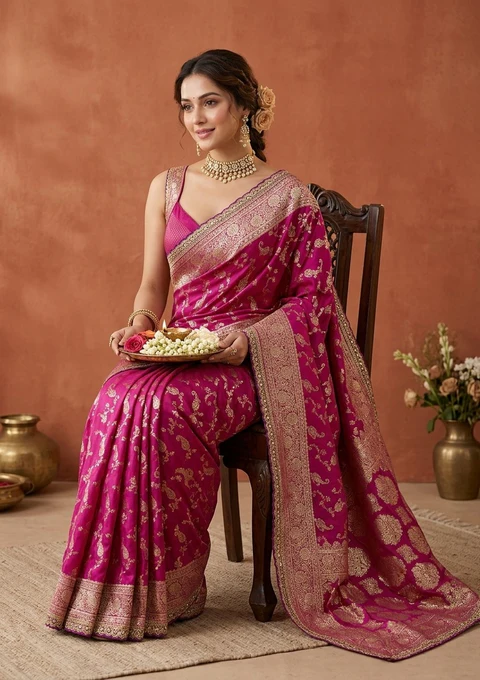
Silk sarees have a smooth feel and a natural shine. People often wear them at weddings, festivals, and other special events.
Georgette:
Georgette is light and flowy. It gives the saree a soft and stylish look.
Chiffon:
Chiffon is a thin and lightweight fabric. It drapes easily and feels comfortable.
Crepe:
Crepe has a slightly rough texture. It is often used for modern saree designs.
Linen:
Linen sarees are light and breathable. They are a good choice for people who want a simple and elegant look.
Rayon:
Rayon is soft and easy to wear. It can also give the saree a look similar to other fabrics.
Other Materials Used in Saree Making
The main fabric is not the only material used to make a saree. The process can also use:
- Cotton yarn
- Silk yarn
- Synthetic yarn
- Dyes
- Zari
- Decorative threads
- Sequins
- Beads
- Embroidery materials
The materials depend on the type of saree.
For example, a simple cotton saree may only need cotton yarn and dye. A silk saree with zari needs more materials and extra work.
The quality of these materials also affects the final saree. Good-quality yarn can make the saree stronger and smoother. Good dyes can give the saree better and longer-lasting colors.