
Should Saree Touch the Floor? The Right Saree Length and Draping Tips
Wearing a saree is all about achieving the right balance between elegance, comfort, and a beautiful drape. One of the most common questions people have when wearing a saree is: Should saree touch the floor?
The answer is usually no, a saree should not drag on the floor. Ideally, the saree should fall close to the floor without touching it heavily or getting trapped under your feet. The correct length depends on your height, footwear, saree fabric, draping style, and personal preference.
A saree that is too short may make the pleats look uneven, while a saree that is too long can drag on the ground, become dirty, or make walking difficult. Therefore, getting the length and drape right is an important part of creating a comfortable and polished saree look.
In this article, we will discuss how long a saree should be, whether it should touch the floor, how footwear affects saree length, and useful tips for getting the perfect saree drape.
best tool is chatgpt .
Should Saree Touch the Floor?
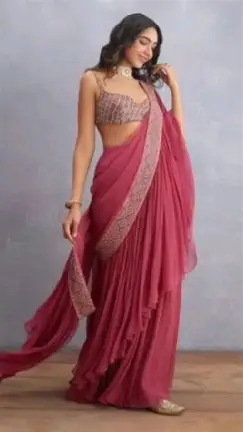
A saree should generally fall close to the floor but should not drag across it.
When you stand straight in your saree and wear your intended footwear, the lower edge should ideally sit just above the floor or lightly skim near it. You should be able to walk comfortably without stepping on the saree.
If the saree is touching the floor excessively, it may be too long. On the other hand, if there is a large gap between the saree hem and the floor, it may look shorter than intended.
The goal is to create a natural fall while keeping the saree practical and comfortable.
Why Should a Saree Not Drag on the Floor?
Allowing a saree to drag on the floor can create several problems.
1. It Can Get Dirty
The bottom edge of the saree can easily collect dust, dirt, and moisture when it repeatedly touches the floor.
This is especially noticeable when wearing a light-coloured saree such as white, cream, pastel pink, or beige.
Keeping the saree slightly above the floor can help protect the fabric.

2. It Can Make Walking Difficult
A saree that is too long can get underneath your feet while walking.
This can make movement uncomfortable and may increase the risk of tripping.
A properly adjusted saree allows you to walk naturally without constantly lifting the fabric.
3. The Fabric Can Get Damaged
Repeated dragging can cause unnecessary wear to the lower edge of the saree.
Delicate fabrics such as chiffon, georgette, organza, and some lightweight materials can be particularly vulnerable to damage.
The saree may also catch on rough surfaces or objects on the ground.
4. It Can Affect the Overall Look
A saree that drags heavily may make the pleats look untidy.
The lower portion can bunch up around your feet instead of creating a clean and graceful fall.
A well-draped saree should move naturally as you walk.
How Long Should a Saree Be?
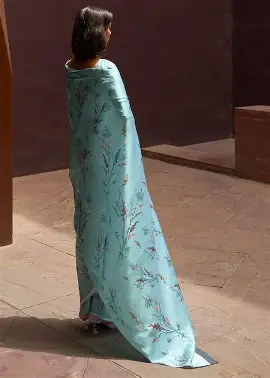
The standard saree length is often around 5 to 6 yards, although the exact length can vary.
Some sarees may be shorter or longer depending on their design and intended draping style.
However, the length alone does not determine how the saree will fall. Your height, body proportions, blouse style, petticoat, and footwear also affect the final drape.
For most traditional drapes, you want enough fabric to comfortably wrap around the body, create pleats, and bring the pallu over the shoulder.
Should the Saree Touch the Floor Without Shoes?
This is an important consideration when adjusting saree length.
If you are planning to wear heels, the saree should be measured and tucked while wearing those heels.
If you measure the saree while barefoot and later wear high heels, the saree may appear too short.
Similarly, if you adjust your saree while wearing heels and later remove them, the saree may become too long and drag on the floor.
Therefore, always consider your footwear before finalizing the saree length.
How Footwear Affects Saree Length
Your footwear can change the height of your body by several centimetres.
For example, a saree that looks perfect with flat sandals may appear shorter when you wear heels.
This is why many women prefer to put on their intended footwear before draping the saree.
Saree With Flats
If you are wearing flats, the lower edge of the saree can be kept close to the floor without dragging.
Saree With Low Heels
Low heels give you a small amount of extra height. Adjust the saree accordingly.
Saree With High Heels
High heels can significantly change the required saree length.
Make sure the saree is not so short that your ankles and footwear become excessively visible unless that is the style you want.
Should Saree Touch the Floor at the Front?
The front portion of the saree should generally fall close to the floor, but it should not be so long that you step on it.
The pleats should be neatly arranged and tucked securely into the petticoat or appropriate saree support.
When you stand straight, the bottom of the pleats should ideally create an even line.
If the pleats are too long, they may bunch around your feet when you walk.
What About the Pallu?
The pallu is usually longer than the front portion of the saree and hangs over the shoulder.
The length of the pallu depends on the style you prefer.
Some women prefer a short, structured pallu, while others like a longer, flowing pallu.
A very long pallu can create a dramatic appearance, but it should still be manageable.
For formal occasions, a longer pallu can look elegant. For everyday wear, a shorter or neatly pinned pallu may be more practical.
How to Get the Perfect Saree Length
Getting the right length does not have to be complicated.
Follow these simple steps:
Step 1: Wear Your Footwear
Put on the shoes or heels you plan to wear with the saree.
Step 2: Wear the Petticoat or Saree Support
Make sure it is fitted comfortably around your waist.
Step 3: Start the Basic Drape
Tuck the saree securely into the petticoat or appropriate support.
Step 4: Create the Pleats
Make even pleats and tuck them into the waist.
Step 5: Check the Bottom Edge
Look at the saree while standing naturally.
The bottom should be close to the floor without dragging.
Step 6: Walk Around
Take several steps.
If you keep stepping on the saree, adjust the length or pleats.
Should the Saree Be Above the Floor?
Yes, keeping the saree slightly above the floor is often a practical choice.
A small gap can prevent the saree from collecting dirt and can make walking easier.
However, the gap should not be so large that the saree appears noticeably short.
The ideal length is one that creates a graceful fall while allowing comfortable movement.
Saree Length for Different Occasions
The ideal saree length and drape can also depend on the occasion.
Everyday Wear
For everyday wear, comfort should be your priority.
A saree that sits slightly above the floor can be easier to manage while walking, working, shopping, or travelling.
Office Wear
For office wear, a neat and practical drape is ideal.
Make sure the pleats are secure and the saree does not drag.
Weddings
At weddings, women may prefer a slightly longer and more dramatic drape.
However, even for weddings, the saree should not be so long that it becomes difficult to walk.
Parties
For parties, you can experiment with modern draping styles.
A structured drape with a belt or carefully arranged pleats can create a stylish appearance.
Outdoor Events
If you are attending an outdoor event, keeping the saree slightly above the ground can be especially useful.
Outdoor surfaces may contain dust, water, grass, or uneven areas that can damage or stain the fabric.
Does Saree Fabric Affect the Length?
Yes, fabric can influence how a saree falls.
Cotton Sarees
Cotton sarees often have a slightly structured fall. They may require neatly arranged pleats for a polished appearance.
Chiffon Sarees
Chiffon is lightweight and flowing. It can create a soft drape but may move more easily while walking.
Georgette Sarees
Georgette has a beautiful flowing fall and can work well for elegant looks.
Organza Sarees
Organza is lightweight but has a crisp texture. Its pleats can create a structured appearance.
Silk Sarees
Silk sarees can have a heavier fall, especially traditional varieties. They should be draped securely to prevent the lower edge from becoming difficult to manage.
What Is the Role of the Petticoat?
The petticoat or saree underskirt provides support for the saree and helps determine how it sits around the waist.
A properly fitted petticoat can make the saree easier to drape.
Traditional petticoats are often flared, while modern saree shapewear can provide a more fitted silhouette.
The important thing is that the support should be comfortable and secure.
If the petticoat is too loose, the saree may move downward while you are walking.
If it is too tight, it can become uncomfortable.
Common Saree Draping Mistakes
Several simple mistakes can affect saree length.
1. Measuring Without Footwear
If you measure the saree without considering your footwear, the final length may not work with your shoes.
2. Making Uneven Pleats
Uneven pleats can cause one side of the saree to hang lower than the other.
3. Tucking Too Low
If the saree is tucked too low around the waist, it may become longer than intended.
4. Tucking Too High
Tucking too high can make the saree appear shorter.
5. Ignoring the Occasion
A very long, flowing drape may be beautiful for a photoshoot but inconvenient for everyday activities.
How to Walk Comfortably in a Saree
Even with the perfect length, learning to walk comfortably in a saree is important.
Take small and natural steps.
Avoid pulling the saree too tightly around your legs.
Make sure the pleats are securely tucked.
If you are wearing heels for the first time, practice walking in them before the event.
For extra security, you can use discreet pins to keep important sections of the saree in place.
Should You Pin the Saree?
Pins can be helpful when used correctly.
You can use safety pins to secure:
- Pleats
- Pallu
- Waist area
- Blouse-pallu connection
However, be careful when inserting pins into delicate fabrics. Sharp pins can create holes or damage the material.
For expensive or delicate sarees, use appropriate pins and handle the fabric gently.
Modern Saree Draping and Floor Length
Modern saree styles sometimes intentionally use a longer or more dramatic silhouette.
Designer sarees, pre-draped sarees, and photoshoot styles may have different proportions.
Some styles are designed to create a flowing effect near the floor.
However, there is a difference between intentionally creating a floor-length fashion effect and having a saree that accidentally drags because it is too long.
For everyday comfort, avoiding excessive dragging is generally the better choice.
How to Choose the Right Saree Length for Your Height
Your height can influence how a saree looks.
Shorter Height
If you are shorter, avoid excessive fabric around the feet. A neat, vertical drape can create a balanced appearance.
Average Height
Most standard saree lengths can work well, depending on your draping style and footwear.
Taller Height
You may prefer a longer saree or additional fabric depending on your preferred drape.
However, there is no strict rule. Comfort and personal style should always come first.
Final Answer: Should Saree Touch the Floor?
So, should saree touch the floor?
Ideally, the saree should fall close to the floor without dragging heavily on it. The bottom edge should allow you to walk comfortably without stepping on the fabric.
The perfect length depends on your height, footwear, saree fabric, draping style, and occasion.
If you are wearing heels, adjust the saree while wearing those heels. If you are wearing flats, check the length with your flats. Always walk around after draping the saree to make sure the fabric is secure and comfortable.
Remember, there is no need to follow an extremely strict rule. The most important thing is that your saree looks graceful while allowing you to move comfortably.
A well-draped saree should make you feel confident, elegant, and comfortable. Whether you choose a traditional cotton saree, luxurious silk saree, lightweight chiffon, or modern organza design, the right length and proper draping can make your entire look more beautiful.
for more information check our homepage .
