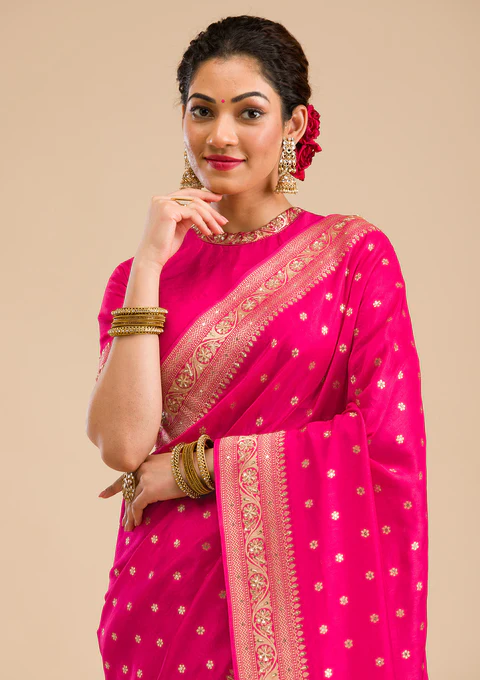
how saree is made
blog

How Saree Is Made: A Simple Step-by-Step Guide

How Saree Is Made: A Simple Step-by-Step Guide Have you ever wondered how a saree is made? A saree may look like one simple piece of cloth. But making one can involve many steps. It starts with raw fibers and ends with a finished saree that is ready to wear. The process depends on the type of saree. Cotton, silk, linen, and synthetic sarees do not always use the same methods. Handloom sarees also need more manual work than powerloom sarees. A saree can include many details. These may include a border, pallu, woven patterns, zari, embroidery, prints, or other decorations. Skilled weavers and other workers handle different parts of the process. They choose the material, prepare the yarn, add color, set the loom, weave the fabric, and check the finished saree. In this guide, we will explain how sarees are made from start to finish. We will also look at the materials used, the weaving process, different saree fabrics, handloom and powerloom sarees, and the time needed to make a saree. How Saree Is Made – What Is a Saree Made Of? The first step in understanding how a saree is made is knowing what materials go into it. Sarees can use many different fabrics. Each fabric has its own texture, weight, shine, and drape. The choice of fabric also affects how the saree is made. How Saree Is Made : Cotton Cotton is one of the most common saree fabrics. Cotton sarees are soft and breathable. They are comfortable in warm weather. Many people wear them for daily use, work, and casual occasions. Cotton yarn is made from cotton fibers. The yarn is then dyed and woven into fabric. How Saree Is Made : Silk Silk is known for its smooth texture and natural shine. Silk sarees are popular for weddings, festivals, and special occasions. Many traditional silk sarees also include zari work and detailed designs. Silk sarees often need careful handling during production. The quality of the silk yarn can affect the final look and feel. How Saree Is Made : Georgette Georgette is a lightweight fabric. It has a soft and flowy drape. It is often used for party-wear and modern sarees. The fabric is easy to style and works well with printed or embroidered designs. How Saree Is Made : Chiffon Chiffon is another light fabric used for sarees. It is thin and flowy. Chiffon sarees often create a soft and elegant drape. How Saree Is Made : Crepe Crepe has a slightly textured surface. It is commonly used for modern sarees. It can hold prints and colors well. How Saree Is Made : Linen Linen sarees have a natural texture. They are light and breathable. They are often chosen for simple and comfortable looks. How Saree Is Made : Rayon Rayon is a soft fabric that can be used to make affordable sarees. It can also copy the look and feel of some natural fabrics. How Saree Is Made : Other Materials Used in Saree Making The main fabric is only one part of the process. Depending on the saree, makers may also use: The materials depend on the design and type of saree. A simple cotton saree may need only yarn and dye. A bridal silk saree may need silk yarn, zari, multiple colors, and detailed decorative work. How Is a Saree Made? Step-by-Step Process Now let’s look at the main steps involved in the saree-making process. 1. Selecting the Raw Material The process starts with the raw material. The maker first decides what type of saree they want to produce. This decision determines the type of fiber or yarn needed. Cotton sarees use cotton fibers. Silk sarees use silk fibers. Synthetic sarees use man-made fibers. The quality of the raw material matters. Good-quality fibers can produce strong and smooth yarn. Poor-quality fibers can make the yarn weak or uneven. The maker also considers the thickness of the yarn. Different saree designs need different yarn thicknesses. For example, a lightweight saree may need fine yarn. A heavier saree may use thicker yarn. After selecting the raw material, it goes through the next stage. 2. Cleaning and Preparing the Fibers Raw fibers need cleaning before they can become yarn. The fibers may contain dirt, small particles, or unwanted material. These need to be removed. The fibers are then separated and straightened. This makes them easier to spin into yarn. The exact method depends on the type of fiber. Cotton, for example, needs different preparation from silk. Once the fibers are clean and ready, they can be turned into yarn. 3. Spinning the Yarn The next step is spinning. Spinning turns loose fibers into long threads called yarn. The fibers are pulled and twisted together. This gives the yarn strength. Machines can handle this process in large factories. Traditional methods may use hand-operated tools. The yarn needs the right amount of twist. If the yarn is too weak, it may break during weaving. If it is too tightly twisted, it may affect the texture of the fabric. The finished yarn is then prepared for dyeing or weaving. 4. Dyeing the Yarn Many sarees get their color before the weaving process. The yarn is placed in a dye solution. The dye enters the yarn and gives it the required color. The maker must control the dyeing process carefully. The amount of dye, temperature, and time can affect the final shade. After dyeing, the yarn is washed. This removes extra dye. The yarn is then dried. Some sarees use one main color. Others use several colors. For a multicolored saree, different sets of yarn may receive different colors. Traditional sarees may also use natural dyes made from plants, flowers, leaves, bark, or other natural materials. 5. Preparing the Warp and Weft This is one of the most important parts of the saree weaving process. A woven fabric uses two main sets of threads. These are called the warp and the weft. What Is the Warp? The