
Where Is Saree From? History, Origin, and Evolution of the Saree
The saree is one of the most beautiful and recognizable traditional garments in India. It is known for its elegance, versatility, and timeless appeal. From weddings and festivals to offices and everyday occasions, sarees are worn by women across different parts of India and beyond.
But where is saree from? The saree has a very long history, and its exact origin cannot be connected to one particular city or region. It developed over thousands of years as Indian clothing traditions evolved. Ancient sculptures, paintings, literature, and archaeological discoveries provide clues about the development of draped garments in the Indian subcontinent.
Today, the saree represents Indian culture and craftsmanship. Different regions have developed their own saree styles, fabrics, weaving techniques, colors, and patterns. This makes the saree much more than just a piece of clothing—it is a part of India’s cultural heritage.
best tool is chatgpt .
Where Is Saree From?
The saree is believed to have originated in the Indian subcontinent, particularly from the ancient traditions of South Asia. It is difficult to give one exact place as the birthplace of the saree because draped clothing existed in different parts of the region for thousands of years.
The word “saree” is generally associated with the Sanskrit word “sati”, which is believed to mean a strip of cloth. Over time, the word and garment evolved into the saree that we know today.
The traditional saree is usually a long, unstitched piece of fabric. It can commonly range from about five to nine yards, depending on the style and region. The fabric is wrapped around the body and arranged in different ways.
The most common modern style involves wrapping the saree around the waist, creating pleats at the front, and placing the remaining fabric over the shoulder as the pallu.
However, this is only one way to wear a saree. India has many regional draping styles.
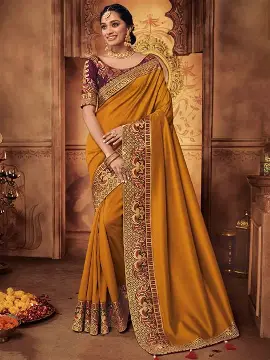
Ancient History of the Saree
The history of the saree goes back thousands of years. Ancient Indian civilizations used various types of textiles and draped garments.
One of the important sources of information comes from the Indus Valley Civilization, which flourished thousands of years ago. Archaeological discoveries and sculptures from the period show people wearing garments that were draped around the body.
Although it is not possible to say that these garments were exactly the same as today’s saree, they demonstrate that draped clothing was an important part of early Indian clothing traditions.
The use of cotton was also well established in ancient India. India became known for producing and weaving cotton textiles, which later became an important part of Indian clothing.
Over centuries, draped garments continued to change according to local customs, climate, culture, and available fabrics.
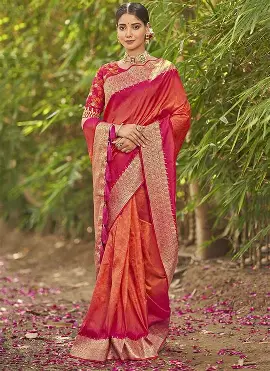
Saree in Ancient Indian Literature
Ancient Indian literature also provides clues about clothing traditions. Sanskrit texts and other historical writings describe different types of garments and textiles.
Women and men in ancient India often wore unstitched or minimally stitched garments. Draping fabric around the body was practical because it allowed flexibility and could be adapted to different climates and occasions.
The idea of wearing an unstitched garment also became connected with cultural and traditional practices in different communities.
It is important to remember that the saree did not suddenly appear in the exact form that we see today. Instead, it developed gradually over a long period.
How Did the Modern Saree Develop?
The saree evolved significantly over the centuries.
During different historical periods, Indian clothing was influenced by regional traditions, trade, new fabrics, court cultures, and interactions with other societies.
The introduction and increasing popularity of stitched clothing also influenced how sarees were worn. The blouse and petticoat became common parts of the modern saree outfit, although their history and adoption varied across regions and communities.
Today, a saree is often worn with:
- A blouse
- A petticoat or underskirt
- The saree itself
- A pallu
- Accessories such as jewelry, belts, or waist chains
Modern saree fashion combines traditional draping with contemporary designs.
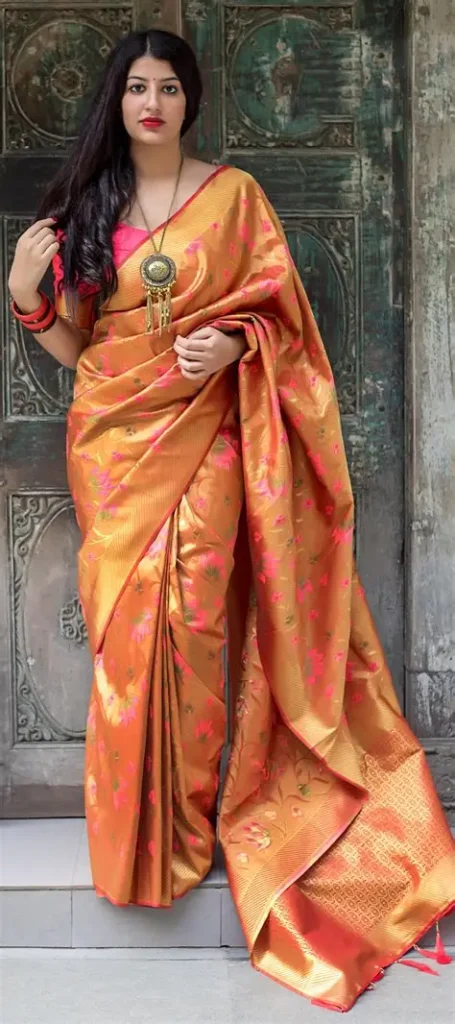
Where Did the Saree Become Popular?
The saree became an important garment throughout the Indian subcontinent rather than belonging to only one region.
Different parts of India developed their own unique sarees. For example, Bengal became famous for Tant and Jamdani sarees, Gujarat and Rajasthan developed beautiful tie-dye and patterned textiles, Maharashtra became known for Paithani and Nauvari sarees, Tamil Nadu became famous for Kanchipuram silk sarees, and Uttar Pradesh became known for Banarasi sarees.
Each region added its own identity to the saree.
This is one reason why it is difficult to answer “where is saree from?” with the name of just one place. The saree is the result of a long and diverse textile tradition spread across the Indian subcontinent.
Famous Sarees From Different Parts of India
India is home to hundreds of saree varieties. Here are some of the most popular ones.
1. Banarasi Saree
Banarasi sarees come from Varanasi in Uttar Pradesh. They are especially famous for their luxurious silk fabric and intricate weaving.
Traditional Banarasi sarees often feature detailed motifs inspired by flowers, leaves, and traditional Indian designs. They are especially popular for weddings and bridal wear.
2. Kanchipuram Saree
Kanchipuram silk sarees come from Tamil Nadu. They are known for their rich silk, vibrant colors, and distinctive borders.
They are particularly popular during weddings, religious celebrations, and festivals.
3. Paithani Saree
Paithani sarees originated in Maharashtra. They are traditionally made from silk and are recognized for their beautiful borders and colorful motifs.
Peacock designs are particularly associated with Paithani sarees.
4. Chanderi Saree
Chanderi sarees come from Madhya Pradesh. They are known for their lightweight texture, delicate appearance, and comfortable feel.
They can be a great choice for people who want an elegant saree that is easy to wear.
5. Chikankari Saree
Chikankari embroidery is strongly associated with Lucknow in Uttar Pradesh. Chikankari sarees feature delicate hand embroidery and have a graceful appearance.
They are popular for casual occasions, festive events, and elegant everyday wear.
6. Sambalpuri Saree
Sambalpuri sarees are associated with Odisha. They are famous for traditional ikat weaving and distinctive motifs.
Many designs feature cultural symbols, geometric patterns, and traditional Odisha-inspired artwork.
7. Tant Saree
Tant sarees are associated with West Bengal. They are usually lightweight cotton sarees and are especially suitable for warm weather.
They are popular for everyday wear and traditional Bengali occasions.
Why Is the Saree Considered a Symbol of Indian Culture?
The saree has survived many centuries of social and cultural change. It has remained relevant because it can adapt to different situations.
A saree can be simple and comfortable for everyday use or highly decorated for weddings and celebrations.
It also represents India’s textile heritage. Behind many sarees are skilled weavers, traditional techniques, regional patterns, and generations of craftsmanship.
For many families, sarees also have emotional value. A saree may be passed from a mother to a daughter or preserved as a memory of a wedding, festival, or special event.
Different Ways to Wear a Saree
One fascinating aspect of the saree is that there is no single way to drape it.
Different regions have different draping styles.
The Nivi style, commonly associated with Andhra Pradesh and Telangana, is one of the most widely recognized styles today.
The Nauvari saree of Maharashtra is traditionally draped in a way that allows greater freedom of movement.
The Mekhela Chador of Assam has its own distinctive structure and is related to the broader tradition of women’s traditional draped clothing in northeastern India.
Bengali saree draping is another recognizable style, often associated with a broad pallu and distinctive presentation.
These different styles show how regional culture has influenced saree fashion.
Saree and Indian Handloom Tradition
The saree is closely connected with India’s handloom industry. Many traditional sarees are made by skilled artisans using techniques passed down through generations.
Handloom sarees can involve detailed processes such as:
- Selecting the yarn
- Dyeing the yarn
- Preparing the threads
- Setting up the loom
- Weaving the fabric
- Creating borders and motifs
- Finishing the saree
Depending on the saree, this process can take considerable time.
Traditional weaving communities have played a major role in keeping India’s textile heritage alive.
How Saree Fashion Has Changed
Although the saree has ancient roots, it continues to change with modern fashion.
Today, designers experiment with different materials, prints, cuts, borders, and blouse designs. Sarees are available in cotton, silk, chiffon, georgette, linen, organza, crepe, satin, and many other fabrics.
Modern women also style sarees in new ways.
Some popular contemporary ideas include:
- Saree with a belt
- Pre-stitched saree
- Saree with a crop top
- Saree with a jacket
- Saree with a modern blouse
- Saree with sneakers
- Saree with statement jewelry
- Minimalist saree styling
These trends have helped introduce sarees to younger generations.
Saree in Modern India
Today, sarees are worn by women of different ages and backgrounds. They remain popular for weddings, festivals, religious events, office functions, parties, and formal occasions.
Bollywood, fashion designers, social media creators, and influencers have also contributed to the popularity of modern saree styling.
The saree has also become popular internationally. Indian communities around the world wear sarees during cultural celebrations and important family events.
Is the Saree Only Indian?
The saree is strongly associated with India, but traditional draped garments have existed throughout South Asia.
Similar garments and clothing traditions can be found in countries such as Bangladesh, Nepal, Sri Lanka, and Pakistan, with regional differences in fabrics, styles, and draping methods.
Therefore, the saree should be understood as part of a broader South Asian textile and clothing history, while India has played a major role in its development, diversity, and global identity.
Why Is the Saree Still Popular Today?
There are several reasons for the saree’s continued popularity.
First, it is extremely versatile. The same basic garment can be styled in many different ways.
Second, sarees are available in a huge variety of fabrics and designs. A woman can choose a lightweight cotton saree for summer or a luxurious silk saree for a wedding.
Third, sarees connect fashion with tradition. They allow people to celebrate cultural heritage while also experimenting with modern styles.
Finally, the saree is comfortable and adaptable when draped appropriately, making it suitable for many different occasions.
Conclusion: Where Is Saree From?
So, where is saree from? The saree comes from the long-standing textile and draping traditions of the Indian subcontinent, with roots stretching back thousands of years. It did not originate as a single modern garment in one specific city. Instead, it developed gradually through ancient clothing traditions and was shaped by different regions, communities, cultures, and weaving traditions.
Today, the saree is one of the most recognizable symbols of Indian fashion and culture. From Banarasi silk in Varanasi and Kanchipuram silk in Tamil Nadu to Paithani in Maharashtra and Tant in West Bengal, every region has contributed something unique to the saree’s story.
The beauty of the saree lies not only in its appearance but also in its history. Every fabric, weave, border, motif, and draping style tells a story of craftsmanship and cultural heritage.
Whether worn traditionally or styled in a modern way, the saree continues to evolve while preserving its connection to India’s rich past. That ability to combine tradition, elegance, comfort, and modern fashion is what makes the saree timeless.
For more information check our homepage .
