
Where Are Saree Manufacturers in India? Top Saree Manufacturing Hubs
India is known for its rich textile heritage, and the saree manufacturing industry in India is one of the most diverse parts of the country’s fashion industry. Sarees are produced in different regions using different fabrics, weaving techniques, prints, embroidery, and traditional craftsmanship.
If you are wondering where saree manufacturers are in India, there is no single city that produces every type of saree. Different cities and regions specialize in different varieties. For example, Surat is a major hub for synthetic and designer sarees, Varanasi is famous for Banarasi silk, Kanchipuram is known for Kanchipuram silk sarees, while Jaipur is associated with colourful prints and traditional textile techniques.
For retailers, wholesalers, boutique owners, online sellers, and anyone planning to start a saree business, understanding these manufacturing hubs can make sourcing much easier.
In this article, we will explore where saree manufacturers are in India, which cities are famous for different sarees, and how you can choose the right manufacturing location for your requirements.
best tool is chatgpt .
Where Are Saree Manufacturers in India?
Saree manufacturers are located across several major textile centres in India. Some of the most important saree manufacturing and weaving regions include:
- Surat, Gujarat
- Varanasi, Uttar Pradesh
- Kanchipuram, Tamil Nadu
- Jaipur, Rajasthan
- Kolkata and surrounding weaving clusters, West Bengal
- Bengaluru and Mysore, Karnataka
- Madurai, Tamil Nadu
- Mau, Uttar Pradesh
- Maharashtra textile clusters
Each location has developed its own speciality based on local skills, raw materials, textile traditions, and manufacturing infrastructure.
Let’s look at the most important saree manufacturing centres in detail.
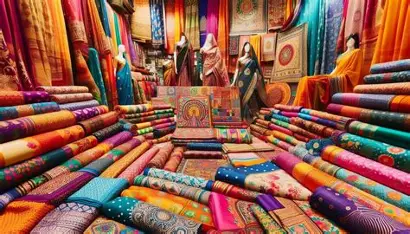
1. Surat – One of India’s Biggest Saree Manufacturing Hubs
When people ask where saree manufacturers are in India, Surat is one of the first cities that comes to mind.
Surat, Gujarat, is a major textile manufacturing centre, particularly for man-made and synthetic fabrics. The Bureau of Energy Efficiency describes Surat as one of Gujarat’s largest textile manufacturing clusters and notes its large powerloom base and significant contribution to India’s man-made fabric production.
The city is especially well known for:
- Georgette sarees
- Chiffon sarees
- Crepe sarees
- Synthetic sarees
- Printed sarees
- Designer sarees
- Embroidered sarees
- Party wear sarees
- Fancy sarees
Surat has a large network of weaving, dyeing, printing, embroidery, processing, and finishing units. This makes it possible for manufacturers to produce large quantities of sarees in a relatively efficient supply chain.
Important textile manufacturing areas around Surat include Pandesara, Udhna, Sachin, and Palsana.
Why Choose Surat for Sarees?
Surat can be a good choice if you need:
- Large quantities
- Affordable sarees
- Trendy designs
- Synthetic fabrics
- Designer collections
- Fast production
- Wholesale sourcing
For online saree businesses and retailers looking for a wide variety of fashionable sarees, Surat can be particularly useful.
2. Varanasi – Famous for Banarasi Sarees
Varanasi in Uttar Pradesh is another major saree manufacturing and weaving centre.
The city is especially famous for Banarasi sarees, which are known for their rich silk fabrics, detailed designs, brocade work, and zari.
Unlike mass-produced synthetic sarees, traditional Banarasi sarees are strongly associated with skilled weaving and craftsmanship. Some designs can require considerable time and expertise to produce.
Varanasi is an excellent destination if you are looking for:
- Banarasi silk sarees
- Zari sarees
- Brocade sarees
- Wedding sarees
- Traditional silk sarees
- Premium ethnic wear
Banarasi sarees are particularly popular for weddings, festivals, religious occasions, and bridal collections.
For a business targeting customers who prefer traditional and premium sarees, Varanasi can be an important sourcing location.
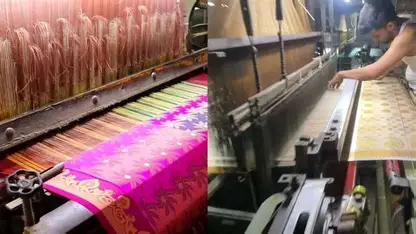
3. Kanchipuram – Home of Traditional Silk Sarees
Kanchipuram in Tamil Nadu is one of India’s most famous silk-saree centres.
The Kanchipuram silk saree is traditionally produced in the Kanchipuram region and is particularly associated with weddings and special occasions. The Government of Tamil Nadu notes that Kanchipuram silk sarees received Geographical Indication recognition in 2005–06.
Kanchipuram sarees are known for:
- Mulberry silk
- Rich colours
- Traditional motifs
- Zari work
- Contrasting borders
- Wedding designs
- Traditional South Indian styling
The region has a long-standing silk-weaving tradition, with numerous families and supporting textile units involved in saree production.
If your target customers are looking for premium bridal or traditional silk sarees, Kanchipuram is an important manufacturing centre to consider.
4. Jaipur – Printed and Colourful Sarees
Jaipur in Rajasthan is another important destination for textile sourcing.
The wider Jaipur region, including areas such as Sanganer and Bagru, is well known for printing traditions and colourful textile designs. Traditional techniques such as block printing and tie-and-dye contribute to the region’s textile identity.
Jaipur is particularly attractive if you are looking for:
- Printed sarees
- Block-printed sarees
- Cotton sarees
- Traditional designs
- Colourful sarees
- Lightweight sarees
- Handcrafted textile products
These sarees can be particularly suitable for customers who prefer comfortable, artistic, and traditional designs.
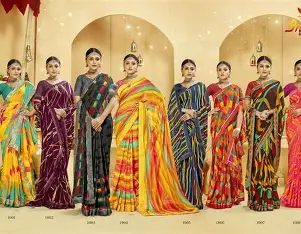
5. Kolkata and West Bengal – Cotton and Traditional Sarees
West Bengal has a strong textile and handloom tradition.
Kolkata is an important trading and distribution centre, while nearby weaving areas such as Phulia, Shantipur, and Dhaniakhali are associated with cotton and traditional saree production.
The region is particularly known for sarees such as:
- Tant sarees
- Cotton sarees
- Baluchari sarees
- Handloom sarees
- Traditional Bengali sarees
Tant sarees are popular for their lightweight and comfortable nature, making them suitable for everyday wear and warm weather.
For a retailer interested in traditional Bengali sarees, West Bengal can offer a strong range of products.
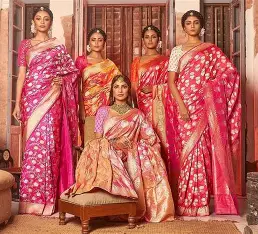
6. Mysore and Bengaluru – Silk Sarees
Karnataka is another important region for silk production and sarees.
Mysore is particularly associated with Mysore silk sarees, which are known for their smooth texture, elegant appearance, and traditional silk craftsmanship.
Mysore silk can be an attractive option for customers looking for elegant sarees for festivals, weddings, religious occasions, and special events.
The broader Karnataka region also has a significant textile and silk ecosystem.
If you are building a premium silk collection, Karnataka can therefore be another useful sourcing destination.
7. Madurai – Cotton Saree Manufacturing
Madurai in Tamil Nadu has a strong textile and handloom tradition.
The region is particularly relevant for cotton sarees and traditional textile production. Tamil Nadu has several important textile centres, and Madurai is among the locations associated with handloom-based production.
Cotton sarees from this region can be suitable for:
- Everyday wear
- Office wear
- Summer collections
- Traditional wear
- Affordable saree collections
If your customers prefer lightweight and breathable sarees, cotton manufacturing centres such as Madurai can be worth exploring.
8. Mau – Growing Saree Manufacturing Centre
Mau in Uttar Pradesh has also developed as a textile and saree production centre.
The city is particularly associated with synthetic and affordable saree production. For businesses targeting budget-conscious customers, manufacturing centres such as Mau can provide additional sourcing options.
Mau can be considered when you are looking for affordable sarees in larger quantities.
9. Maharashtra – Important Textile Manufacturing Regions
Maharashtra also has several textile manufacturing clusters.
Cities such as Ichalkaranji, Solapur, Kolhapur, Sangli, Mumbai, and others have textile-related industries. Government-linked textile information identifies multiple cotton and silk manufacturing locations across Maharashtra.
These regions can be useful for businesses searching for cotton textiles, traditional fabrics, and other textile products.
Mumbai, in particular, is also an important commercial and distribution centre for fashion and textiles.
Which City Is Best for Saree Manufacturing?
There is no single “best” city for every type of saree.
The right location depends on what kind of sarees you want to purchase.
| City | Best Known For |
|---|---|
| Surat | Synthetic, georgette, chiffon, designer sarees |
| Varanasi | Banarasi silk and brocade sarees |
| Kanchipuram | Traditional silk and bridal sarees |
| Jaipur | Printed, block-print and colourful sarees |
| Kolkata/West Bengal | Cotton, Tant and traditional sarees |
| Mysore | Mysore silk sarees |
| Madurai | Cotton and handloom sarees |
| Mau | Affordable synthetic sarees |
Therefore, before contacting a manufacturer, first decide what type of saree you want to sell.
How to Choose the Right Saree Manufacturer in India
Finding a manufacturing city is only the first step. You also need to select a reliable manufacturer.
Here are some important factors to consider.
1. Check the Manufacturer’s Product Range
Look at the manufacturer’s catalogue and check whether it matches your target customers.
For example, if your website focuses on affordable party wear sarees, you may prefer manufacturers offering georgette, chiffon, crepe, and embroidered sarees.
If your business focuses on bridal sarees, silk-producing regions may be more appropriate.
2. Ask About Minimum Order Quantity
Manufacturers may have different minimum order quantities, commonly called MOQ.
Before placing an order, ask:
- What is the minimum quantity?
- Can I order mixed designs?
- Can I order different colours?
- Is there a minimum amount per design?
- Do you offer sample orders?
This is especially important for small businesses.
3. Check Fabric Quality
Never select a manufacturer based only on price.
Ask about:
- Fabric composition
- Saree length
- Blouse piece availability
- Border quality
- Print quality
- Embroidery quality
- Colour fastness
- Finishing
If possible, order samples before making a large purchase.
4. Compare Wholesale Prices
Prices can vary depending on the fabric, manufacturing process, embroidery, design, and quantity.
Compare prices from several manufacturers rather than choosing the first supplier you find.
A slightly more expensive saree may offer better quality and fewer customer complaints.
5. Check Manufacturing Capacity
If you are planning to sell sarees online or through multiple stores, you need a manufacturer who can maintain consistent supply.
Ask whether the manufacturer can handle repeat orders and larger quantities.
6. Ask About Custom Designs
If you want your saree business to have a unique identity, ask whether the manufacturer offers customization.
Some manufacturers may provide options for:
- Custom colours
- Custom prints
- Private labels
- Custom embroidery
- Custom packaging
- Brand tags
This can help you build your own saree brand.
Manufacturer vs Wholesale Market: What Is the Difference?
A manufacturer actually produces the saree or manages its production, while a wholesaler generally purchases products from manufacturers or other suppliers and sells them in bulk.
For large-scale businesses, buying directly from a manufacturer can sometimes provide better control over pricing, customization, and repeat supply.
However, wholesalers can be useful when you want to buy smaller quantities or multiple brands and designs from one location.
This is why it is important to understand whether you are dealing with a manufacturer, wholesaler, trader, or distributor.
Can You Buy Sarees Directly From Manufacturers?
Yes, depending on the manufacturer, you may be able to purchase directly.
Many manufacturers work with retailers, boutiques, online stores, exporters, and resellers.
For first-time buyers, it is better to start with a small trial order. Check the product quality, packaging, delivery time, communication, and customer service before placing a large order.
If you cannot visit the manufacturing city, ask the supplier for product videos, detailed photographs, fabric information, GST details, and samples where appropriate.
Why India Has So Many Saree Manufacturing Centres
India’s saree industry developed differently across regions because of local weaving traditions, available raw materials, artisan communities, and regional fashion preferences.
This is why one region became famous for silk while another developed expertise in cotton, printing, synthetic fabrics, or embroidery.
This regional diversity is one of the greatest strengths of India’s saree industry.
A customer can choose from thousands of designs without leaving the country, while a retailer can source products from different manufacturing clusters according to their target market.
Final Thoughts
If you are wondering where saree manufacturers are in India, the answer is spread across several major textile and weaving centres.
Surat is a major destination for synthetic, designer, printed, georgette, chiffon, and other fashionable sarees. Varanasi is famous for Banarasi silk and brocade, while Kanchipuram is renowned for traditional silk sarees. Jaipur offers beautiful printed and handcrafted textile styles, while West Bengal is known for cotton and traditional handloom sarees. Mysore, Madurai, Mau, and textile centres across Maharashtra provide additional sourcing options.
The best manufacturing location ultimately depends on your product category, budget, quantity, quality requirements, and target customers.
If you are starting or growing a saree business, researching these manufacturing hubs before buying can help you find better products, compare prices, and build a collection that matches your customers’ needs.
for more information check our homepage .
